
The short answer
If your home has persistent dust, odors, stuffiness, or allergy flare-ups, your HVAC system is often part of the cause and part of the fix. AllPro HVAC Services inspects your filter, ducts, coil, drainage, and airflow, then recommends targeted repairs or upgrades, from better filtration and duct sealing to air cleaners or ventilation, based on what we actually find.
Indoor air quality problems in Los Angeles homes usually show up as dust that comes back right after you clean, rooms that feel stuffy, odors when the system kicks on, or allergy symptoms that ease when you leave the house. Your heating and cooling system moves the air in your home through the same filter, coil, and ducts over and over, so it can either help clean that air or keep spreading the problem around. AllPro HVAC Services inspects the parts of your system that affect the air you breathe, explains what we find in plain terms, and recommends fixes that fit your home and how your household actually uses it. We serve homeowners across Los Angeles and nearby cities, and we offer 24/7 emergency service when something can't wait, like a burning smell or a suspected furnace venting problem.
Signs Your Home Needs an Indoor Air Quality Check
Los Angeles has a Mediterranean climate with dry summers and mild winters, and that shapes the air inside your home. Long dry stretches, fall Santa Ana winds, and dust from traffic and construction all push fine particles indoors. Homes in the valleys and inland neighborhoods run much hotter in summer than areas near the coast, so their air conditioning often runs for months at a time. More runtime means more air pulled through filters and ducts, and any weak spot in the system gets more chances to cause trouble.
These are the signs we hear about most often:
- Dust builds up on furniture within a day or two of cleaning
- Visible dust or dark streaks around supply vents
- Musty, sour, or burning smells when the system turns on
- Allergy or asthma symptoms that are worse at home than elsewhere
- Rooms that feel stuffy, stale, or noticeably hotter or colder than others
- Filters that clog quickly or look dirty soon after a change
- Water around the indoor unit or a damp smell near the air handler
- Headaches or drowsiness that improve when you leave the house, which can point to a ventilation or combustion problem worth checking promptly
What We Check During an Air Quality Inspection
We look at the whole path the air takes through your home, not just the filter. The goal is to find where dirt, moisture, or outside air is getting in and why it isn't being removed.
After the inspection, we walk you through what we found, show you photos when they help, and separate the urgent items from the optional improvements.
- Filter size, type, and fit, including gaps around the filter rack that let air bypass it
- Return air grilles and pathways, and whether the system is pulling air from dusty spaces
- Ductwork in attics, crawlspaces, and garages for leaks, disconnected joints, crushed runs, and damaged insulation
- The indoor evaporator coil and drain pan for buildup, standing water, or growth
- The condensate drain line for clogs and slow drainage
- The blower wheel and cabinet for dust and debris
- Airflow at supply vents and balance between rooms
- Indoor humidity levels
- Gas furnaces for proper venting and signs of combustion problems
- Any existing air cleaners, UV lights, or humidifiers to confirm they work as intended
Repair, Upgrade, or Replace: Your Options
Many air quality problems have straightforward fixes. Sealing leaky return ducts in a dusty attic, cleaning a dirty coil, clearing a clogged drain, or getting the right filter seated properly can make a noticeable difference without new equipment.
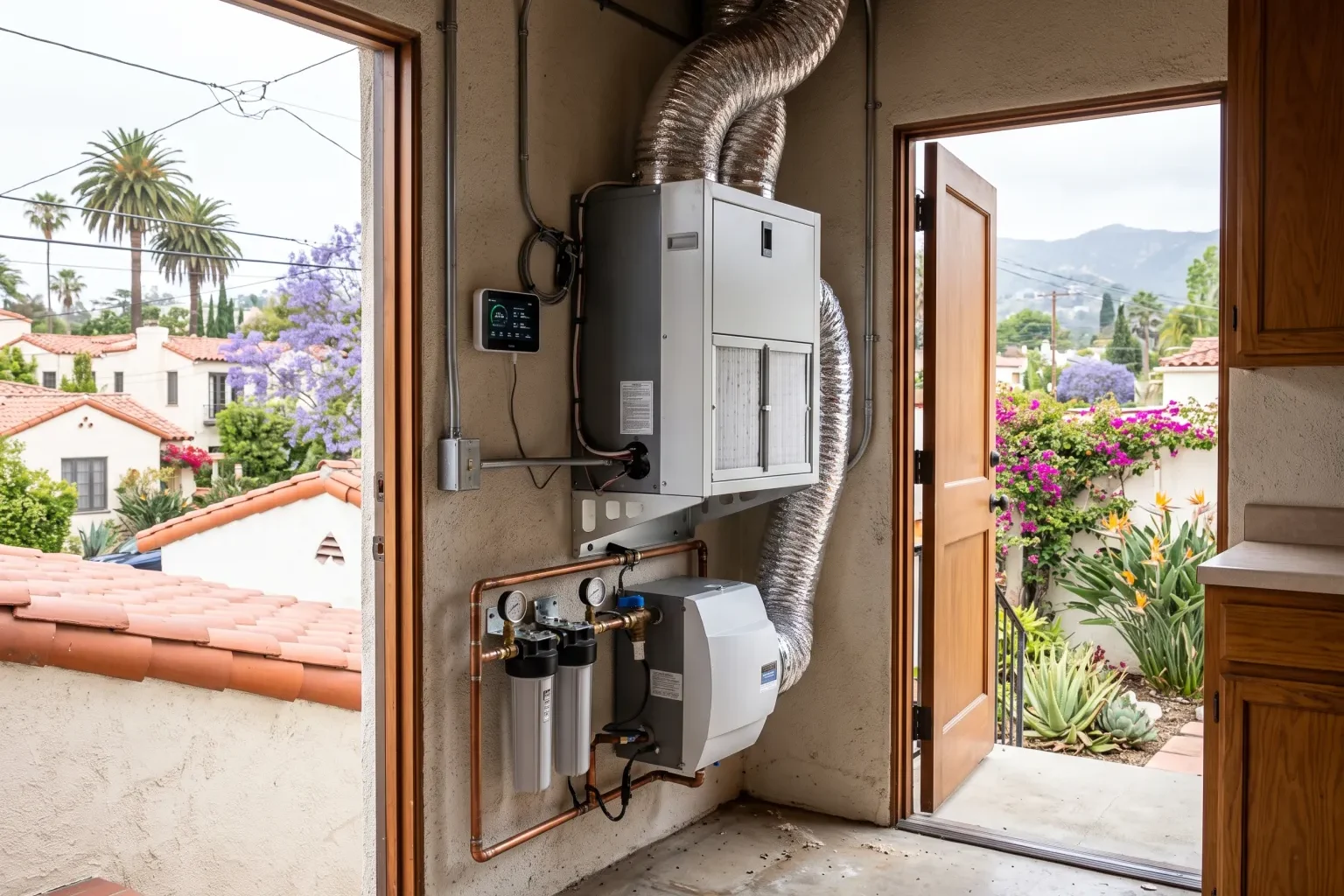
If basic repairs aren't enough, upgrades can add another layer of protection. Options include a media filter cabinet that holds a thicker, higher-efficiency filter, an electronic air cleaner, UV lights aimed at the coil, ventilation equipment that brings in filtered outdoor air, or humidity control. Higher-efficiency filters can restrict airflow, so we check that your blower and ductwork can handle one before recommending it. We do not recommend devices that intentionally produce ozone.
Replacement makes sense when ductwork is badly deteriorated, or when the HVAC equipment itself is failing, rusting, or venting unsafely. If you are replacing a gas furnace, South Coast AQMD Rule 1111 limits NOx emissions from natural-gas central furnaces sold and installed in this region, and the district has been amending it toward zero-emission requirements, so check the current rule and its compliance dates before you plan. If you are considering a heat pump, LADWP residential customers can apply for rebates on qualifying systems based on SEER2/HSPF2 ratings, filed after purchase and installation and within 12 months of purchase. Many homes outside the City of Los Angeles are served by Southern California Edison instead, so available rebates depend on your utility, and we confirm the current offer before quoting it. The federal 25C tax credit for heat pumps applied only to equipment placed in service before December 31, 2025, and is not available for new installations.
What Affects the Cost
Every home is different, so we give you a written estimate after the inspection rather than guessing over the phone. These are the factors that drive the total:
- Whether the fix is a repair, an add-on upgrade, or equipment replacement
- The size of your home and how many systems or zones it has
- Duct condition, length, and how hard the ducts are to reach
- The type of filtration, air cleaner, or ventilation equipment you choose
- Whether electrical work or modifications to the air handler are needed
- Ongoing upkeep, such as replacement filters, UV bulbs, or cleaning schedules
How a Visit Works
When you contact us, we ask about the symptoms you've noticed, the age of your system, and any concerns like allergies or pets. That helps the technician come prepared.
At your home, the technician inspects the system, explains the findings, and lays out options with clear priorities. You decide what to do. If you approve a repair and we have the parts on hand, we can often complete it the same visit. Larger upgrades or replacements are scheduled at a time that works for you, and we test airflow and operation when the work is done.