
The short answer
Duct cleaning makes sense when you see visible buildup, debris blowing from vents, signs of pests or mold, or after a remodel. Many airflow and dust problems are actually caused by leaks or damaged ducts, so we inspect first and recommend cleaning, repair, or replacement based on what we find.
Your ducts carry all the air your heating and cooling system moves through your home. Over time they collect dust, pet hair, construction debris, and sometimes signs of pests or moisture. In Los Angeles, dry summers, fall Santa Ana winds, and long cooling seasons in inland neighborhoods and valleys keep systems running hard and bring plenty of fine dust indoors. AllPro HVAC Services cleans, inspects, and repairs duct systems for homeowners across Los Angeles and nearby cities. We also tell you plainly when cleaning won't solve the problem. Leaky, crushed, or disconnected ducts need repair, not just a vacuum. This page explains how to tell if your ducts need attention, what we look at, your options, and what to expect when we come out.
Signs Your Ducts Need Cleaning or Repair
Most homes don't need duct cleaning on a fixed schedule. It's worth a look when something specific points to a problem. Some signs suggest dirty ducts. Others point to leaks or damage, which cleaning alone won't fix.
If you notice any of the following, it's a good time to have the ducts inspected:
- Dust or debris puffing out of supply vents when the system starts
- Visible buildup on vent covers, return grilles, or the inside of duct openings
- Dust settling on furniture soon after you clean
- A recent remodel, drywall work, or flooring job, which can leave fine debris in the ducts
- Signs of rodents or insects, such as droppings, nesting material, or odors near vents
- Musty smells or visible mold growth near vents or the air handler
- Rooms that are noticeably hotter or colder than the rest of the house
- Weak airflow from some vents even with a clean filter
- Whistling, rattling, or banging sounds in the ductwork
What We Check During a Duct Inspection
Before we recommend any work, we look at the whole air path, not just the vents you can see. In many Los Angeles homes, ducts run through hot attics or tight crawlspaces where damage can go unnoticed for years. An attic duct that has come apart can pull in dust and lose a lot of the cooled air your system works to make.
We typically check the condition of the supply and return ducts, including joints, seams, and connections at each register. We look for crushed, kinked, or sagging flexible duct, torn or missing insulation, and gaps where duct meets the plenum or air handler. We inspect the return side for leaks that draw in attic or crawlspace air, and we look at the blower, coil area, and filter rack for buildup that can affect airflow.
We also note any signs of moisture, pests, or mold. If we see something that needs a specialist, such as a pest problem, we'll tell you so you can deal with the source before the ducts are cleaned.
Clean, Repair, or Replace: Your Options
Once we know what's going on, we'll walk you through the options that fit your situation.
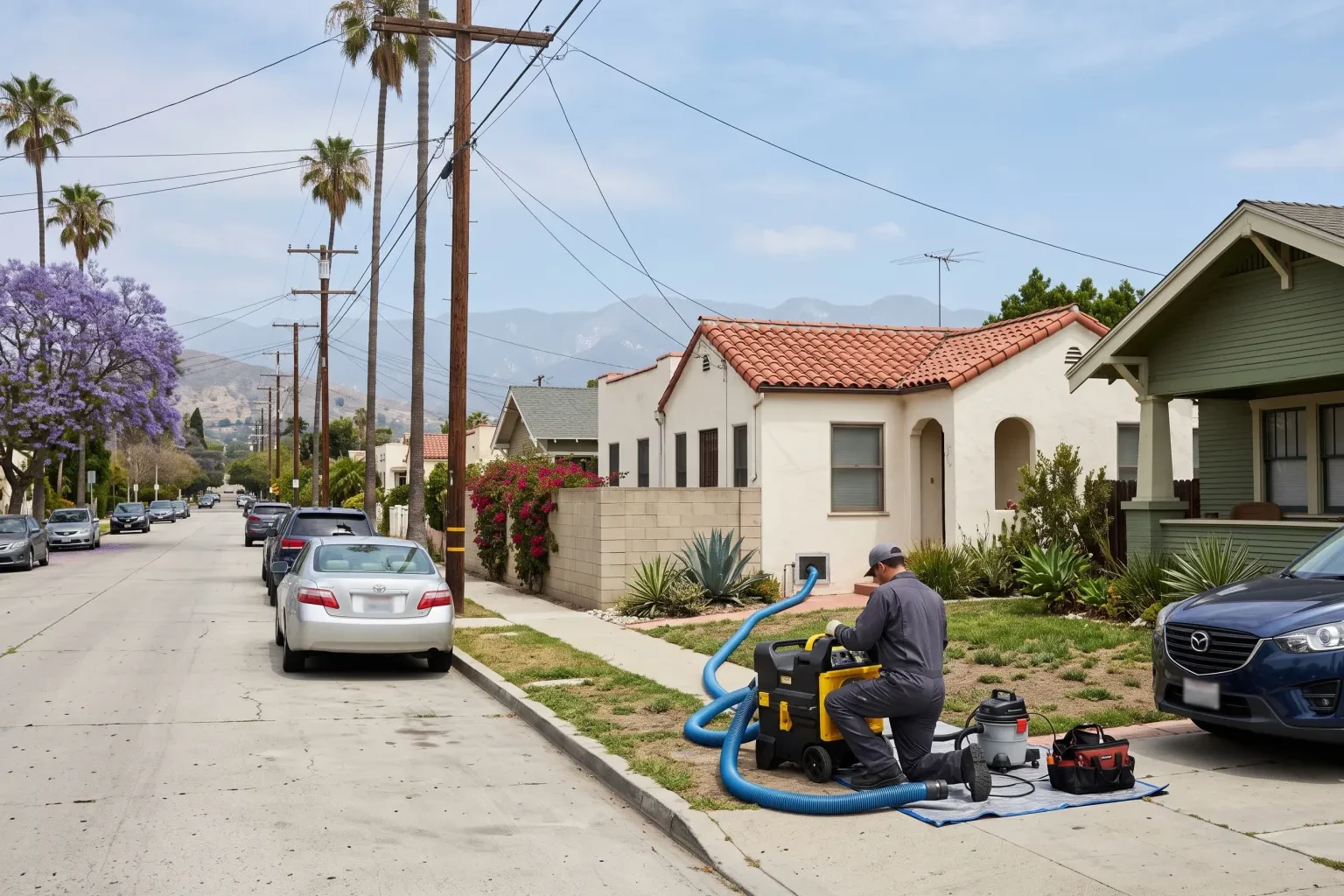
Cleaning is the right choice when the ductwork is in good shape but has collected dust, debris, or remodel residue. We use equipment that keeps the system under negative pressure while we loosen and remove material, so debris is pulled out instead of blown into your rooms. Cleaning usually includes the registers, grilles, and accessible parts of the air handler.
Repair makes sense when most of the system is sound but certain sections are leaking, disconnected, crushed, or poorly insulated. Common repairs include resealing joints, reconnecting runs, replacing damaged sections of flexible duct, and adding or fixing insulation. Fixing leaks often does more for comfort and dust control than cleaning does.
Replacement is worth considering when ducts are old, brittle, badly damaged, undersized for the system, or contaminated in a way that can't be cleaned reliably. Replacement is also a good time to correct layout problems that cause uneven temperatures. If you're planning to replace your furnace or switch to a heat pump at the same time, we can help you think through the timing so the new equipment and ducts work well together.
What Affects the Cost of Duct Work
Every home is different, so we give you a clear quote after we've seen the system. The main factors include:
- The size of your home and the number of supply and return vents
- How easy it is to reach the ducts, especially in tight attics or low crawlspaces
- The type of ductwork, such as flexible duct, sheet metal, or duct board
- How much debris is present, and whether there are pests, mold, or remodel residue to remove
- Whether repairs, resealing, or new insulation are needed along with cleaning
- Whether any sections or the full system need replacement
- Add-on work such as cleaning the blower or coil, or replacing registers and grilles
How a Duct Cleaning Visit Works
When you call, we'll ask a few questions about your home, your system, and what you've noticed, then schedule a time that works for you. When the technician arrives, they'll start with an inspection and explain what they find, using photos when it helps. You'll get a clear recommendation and a quote before any work begins.
If you approve cleaning, we protect floors and furniture near the work area, connect equipment to the system, and clean the ducts section by section, along with the registers, grilles, and accessible air handler parts. If repairs are part of the plan, we seal leaks, reconnect loose runs, and replace damaged sections. Afterward, we install a fresh filter if needed, run the system to confirm airflow, and go over what we did and any follow-up we'd suggest.
If something urgent comes up, like a system failure during a heat wave, we offer 24/7 emergency service.