
The short answer
Most Los Angeles homes benefit from HVAC maintenance once a year, or twice if you use both heating and cooling, ideally before summer heat arrives. A visit includes cleaning, testing and a plain explanation of what we found, and nothing gets repaired without your approval.
Your heating and cooling system works hardest when you least want it to fail: an inland heat wave in August, a hot Santa Ana spell in the fall, or the first chilly night of winter. Routine maintenance catches small problems before they turn into a no-cool or no-heat call. AllPro HVAC Services maintains central air conditioners, heat pumps, gas furnaces and ductless systems for homeowners in Los Angeles and nearby cities. This page covers when your system needs attention, what our technicians check, how we help you weigh repair against replacement, what affects the cost of a visit, and what to expect from the moment you schedule.
Signs Your System Needs Maintenance
Most systems benefit from a check once a year, and twice a year if you run both heating and cooling. In Los Angeles, a spring visit before the hot months makes sense, especially in the valleys and inland neighborhoods where summer temperatures run much higher than near the coast. Beyond the calendar, these signs mean it's time to call:
Dry summers and fall winds also mean dust builds up quickly on filters and outdoor coils. A clogged filter or dirty coil forces the system to run longer to do the same job, which adds wear and raises energy use.
- Rooms that are noticeably warmer or cooler than the rest of the house
- Weak airflow from the vents, or air that isn't as cold or warm as it used to be
- The system turning on and off in short bursts
- New noises such as rattling, squealing, grinding or a loud bang at startup
- Musty, burning or electrical smells when the system runs
- Water pooling around the indoor unit or ice on the refrigerant lines
- Utility bills creeping up without a change in how you use the system
- More dust in the house than usual, or allergy symptoms that flare indoors
What We Check During a Maintenance Visit
A maintenance visit is a hands-on inspection and cleaning, not a quick glance at the thermostat. The exact list depends on your equipment, but a typical visit covers the following:
When we're done, you'll get a plain explanation of what we found, what we cleaned or adjusted, and which items need attention now versus things to keep an eye on.
- Air filter condition, with replacement if needed
- Thermostat settings, wiring and operation
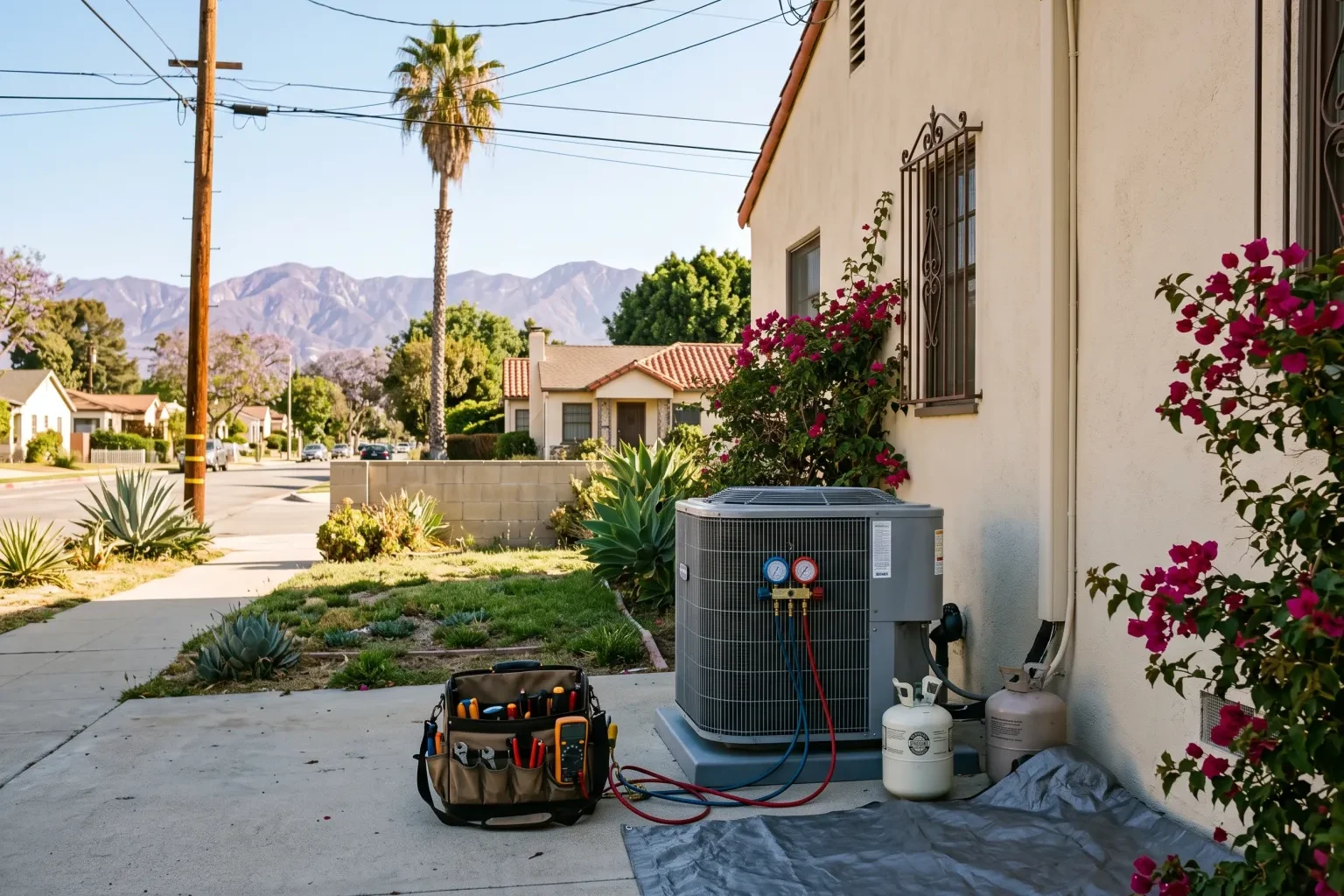
- Outdoor condenser coil inspection and cleaning of dust, leaves and debris
- Refrigerant pressures and temperature readings to spot a possible leak or charge problem
- Electrical connections, capacitors and contactors for wear or heat damage
- Blower motor and wheel, fan blades and belts where applicable
- Condensate drain line and pan, cleared so water drains properly
- Furnace burners, flame sensor, ignition and a visual check of the heat exchanger
- Gas connections and venting, including a check for carbon monoxide concerns
- Accessible ductwork for disconnected or leaking sections
Repair or Replace: Weighing Your Options
Maintenance often turns up a worn part. Most of the time, repair is the sensible choice. A failed capacitor, a clogged drain line or a dirty flame sensor is a routine fix, and we'll tell you when a repair is straightforward.
Replacement is worth discussing when a system is near the end of its life, needs a major component like a compressor or heat exchanger, uses an older refrigerant that is becoming harder to service, or simply can't keep the house comfortable. We'll lay out both paths and let you decide.
If you're considering a new gas furnace, keep in mind that South Coast AQMD Rule 1111 limits nitrogen oxide emissions from natural-gas central furnaces sold and installed in the Los Angeles region, and the district has been amending the rule toward zero-emission requirements. The district sets and revises the compliance dates, so check the current rule before planning a replacement. We can walk you through what applies to your home.
Many homeowners also look at heat pumps, which heat and cool in one system. If LADWP provides your electricity, you may be able to apply for a Consumer Rebate Program rebate on a qualifying heat pump system. The amount depends on the unit's SEER2 and HSPF2 ratings, and you file the application after the equipment is purchased and installed, within 12 months of purchase. Many homes outside the City of Los Angeles are served by Southern California Edison instead, so the rebates available depend on your address, and we confirm the current offer before quoting it. The federal Energy Efficient Home Improvement Credit covered qualifying heat pumps placed in service before December 31, 2025, and it isn't available for new installations after that date.
What Affects the Cost
We give you a clear quote before any work begins. The cost of a maintenance visit or a follow-up repair depends on several factors:
Regular maintenance tends to keep repair costs down over time, because problems are caught while they're still small.
- The type and number of systems, such as a single air conditioner, an AC and furnace together, or a multi-zone ductless setup
- How long it has been since the last service and how much cleaning the equipment needs
- Access to the equipment, including attic, crawlspace or rooftop units
- Parts or refrigerant needed if we find a problem
- Whether you need an urgent or after-hours visit
How a Maintenance Visit Works
Scheduling is simple. Tell us what equipment you have, any symptoms you've noticed and when you're available. We'll set a time window and let you know when the technician is on the way.
When the technician arrives, they'll ask about your concerns, then inspect the indoor and outdoor equipment. It helps to have clear access to the thermostat, the indoor unit, the outdoor unit and the electrical panel. Most visits take an hour or two, depending on the system.
Before leaving, the technician reviews the findings with you, shows you anything that needs attention and explains your options. No repair happens without your approval. If your system stops working entirely, we offer 24/7 emergency service.