
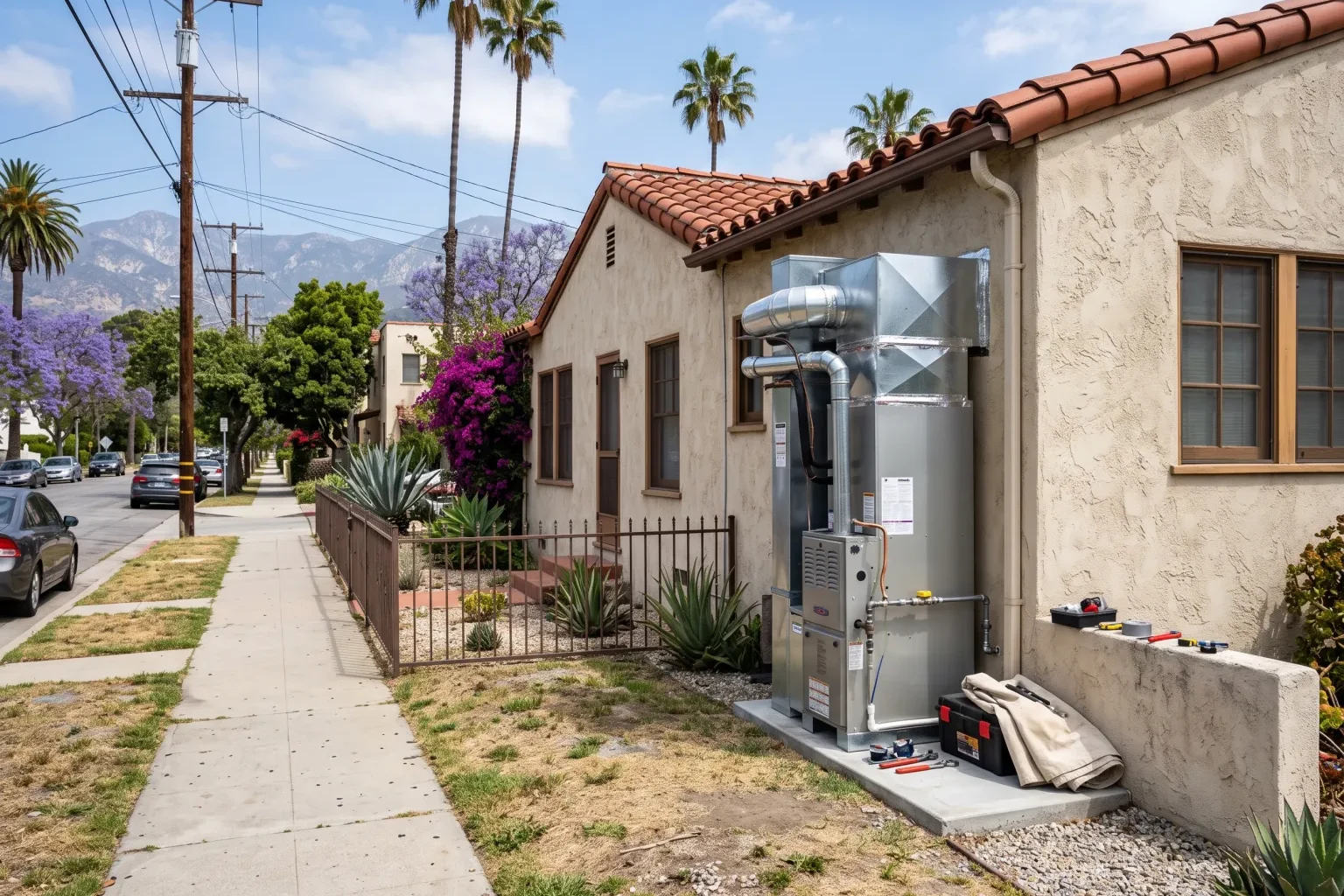
The short answer
If your furnace or heat pump isn't heating evenly, is making new noises or smells, or keeps shutting off, it likely needs repair. Most problems are fixed by replacing a single worn part. Our technicians diagnose the cause, explain your options and the cost before any work begins, and offer 24/7 emergency service.
Los Angeles winters are mild, so many furnaces and heat pumps sit idle for months and then get switched on during the first cold night of the season. That long rest is often when problems appear: dust burning off the burners, a pilot that won't stay lit, or a heat pump that blows cool air. AllPro HVAC Services repairs gas furnaces, wall furnaces, and heat pumps for homeowners across Los Angeles and nearby cities. We also offer 24/7 emergency service when the heat goes out on a cold night. This page covers the warning signs, what we inspect, how to weigh repair against replacement, and what to expect when a technician comes out.
Signs Your Heating System Needs Repair
Heating systems in Southern California often go unused from spring through fall, so small problems can stay hidden until you need warmth. Call for a repair if you notice any of the following:
If you smell gas or a carbon monoxide alarm sounds, leave the house first. Then call your gas utility or 911 from outside. Once the home is safe, we can inspect the system and find the source.
- No heat at all, or the system runs but blows cool or lukewarm air
- Short cycling, where the furnace or heat pump starts and stops every few minutes
- Rooms that heat unevenly, or a house that never reaches the thermostat setting
- New noises such as banging, squealing, scraping, or a loud rumble when the burners light
- A burning smell that lasts beyond the first few minutes of the season, or any electrical smell
- A yellow or flickering burner flame instead of a steady blue one
- A pilot light or igniter that won't stay lit, or a system that keeps locking out
- Higher gas or electric bills with no change in how you use the heat
- A carbon monoxide alarm going off, or headaches and drowsiness that ease when you leave the house
What We Check During a Heating Repair Visit
Every visit starts with the problem you describe. We still look at the whole system, because one failing part often puts stress on another. Depending on whether you have a gas furnace, a wall furnace, or a heat pump, a technician will typically check:
We explain what we found in plain terms and show you the worn or failed part when we can. We'll also tell you which issues need attention now and which can wait.
- Thermostat settings, wiring, and batteries, and whether it is calling for heat correctly
- Air filter condition and airflow through the return and supply vents
- Igniter or pilot assembly, flame sensor, and gas valve
- Burners and flame quality, plus a look at the heat exchanger for cracks or corrosion
- Blower motor, capacitor, and belt on older units, plus the inducer motor that vents combustion gases
- Limit switches, pressure switches, and the control board, including any stored error codes
- Venting and flue connections, to confirm exhaust leaves the home safely
- On heat pumps, the reversing valve, defrost controls, outdoor coil, refrigerant level, and backup heat strips
- Ductwork in accessible areas, looking for disconnected or crushed sections
Repair or Replace: Weighing Your Options
Most heating problems are fixed with a repair, such as a new igniter, flame sensor, capacitor, blower motor, or control board. Repair usually makes sense when the rest of the system is in good shape, the failed part is available, and the unit has been heating the house well.
Replacement is worth discussing when the heat exchanger is cracked, repairs are becoming frequent, parts are hard to find, or the system can no longer keep the house comfortable. We lay out both paths so you can decide. We don't push replacement when a repair will do the job.
If you're considering a new gas furnace, know that South Coast AQMD Rule 1111 limits NOx emissions from natural-gas central furnaces sold and installed in this region. The district has been amending the rule toward zero-emission requirements, and it sets and revises the compliance dates. Check the current rule before you commit to a replacement plan.
Many homeowners look at heat pumps, which handle both heating and cooling. They suit our mild winters and the much hotter summers in inland neighborhoods and valleys. LADWP residential customers can apply for rebates on qualifying heat pump systems, with the amount based on the unit's efficiency rating. You file that application after the equipment is purchased and installed, within 12 months of purchase. Homes outside the City of Los Angeles are often served by Southern California Edison instead, so the rebates available depend on your address. We confirm the current offer before quoting it. The federal 25C tax credit for heat pumps covered only systems placed in service before December 31, 2025, so it isn't available for new installations.
What Affects the Cost of Heating Repair
We give you a clear quote after we diagnose the problem and before any repair work begins. The final cost depends on several factors:
Regular maintenance can help prevent some of the more costly failures, especially those caused by dirty filters and restricted airflow.
- The type of system: gas furnace, wall furnace, heat pump, or a dual-fuel setup
- Which part failed, and whether it's a simple component or a major one like a blower motor or control board
- How easy the part is to get, especially for older or less common equipment
- Where the equipment sits, since attics, crawl spaces, and tight closets take more time to work in
- Whether the problem caused related damage, such as an overheated motor or a cracked heat exchanger
- Timing, since after-hours and emergency visits are priced differently than scheduled appointments
How a Heating Repair Visit Works
When you contact us, we'll ask what you're noticing, what type of system you have, and when the problem started. We'll schedule a visit at a time that works for you. In an emergency, we'll send a technician as soon as possible.
On site, the technician listens to your description, then inspects and tests the system to find the cause. You'll get an explanation of the problem, your repair options, and the cost before we start. With your approval, we complete the repair, run the system through a full heating cycle, and confirm it is venting safely.
Before leaving, we walk you through what was done. We'll also point out anything worth watching, such as an aging part that may need attention later. If you'd like, we can set up a maintenance visit before next winter.
Heating Repair by city
- Heating Repair in South Pasadena
- Heating Repair in Alhambra
- Heating Repair in Monterey Park
- Heating Repair in Vernon
- Heating Repair in Glendale
- Heating Repair in San Marino
- Heating Repair in Pasadena
- Heating Repair in San Gabriel
- Heating Repair in Maywood
- Heating Repair in Huntington Park
- Heating Repair in Commerce
- Heating Repair in Bell